
What Small Businesses Should Know Before Buying a Website
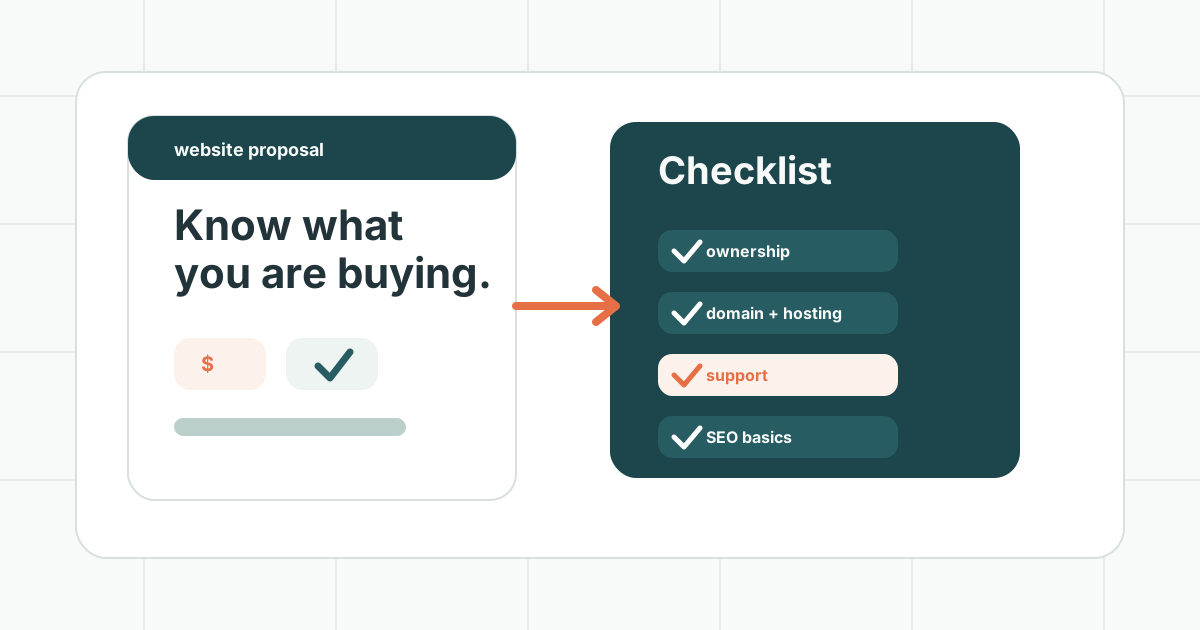
Buying a website can feel strangely difficult.
You know your business needs one. You may even know what you want it to say. But once pricing, hosting, domains, SEO, maintenance, platforms, and design options enter the conversation, the decision can get muddy fast.
For small businesses, the goal should be simple:
Get a professional website you can afford, understand, maintain, and grow from.
Here is what to know before you buy.
Start with the Job the Website Needs to Do
Before talking about platforms or page counts, start with the business goal.
Your website may need to:
- Help people find you on Google
- Explain your services clearly
- Make your business look trustworthy
- Capture leads through a contact form
- Send people to book an appointment
- Sell products
- Promote an event or campaign
- Answer common customer questions
- Show examples of your work
A simple website with a clear purpose is usually better than a large website with no focus.
If you are just getting started, you probably do not need every feature at once. You need the right first version.
Understand the Real Cost
Website pricing can vary wildly.
One person may quote a few hundred dollars. Another agency may quote several thousand. A larger firm may quote tens of thousands.
Those prices can all be reasonable depending on what is included.
When comparing cost, ask what you are actually buying:
- Strategy and planning
- Copywriting
- Design
- Development
- Mobile optimization
- SEO setup
- Contact forms
- Analytics
- Domain help
- Hosting setup
- Launch support
- Ongoing updates
- Maintenance and security
A cheap website that does not include support, SEO basics, or ownership clarity can become expensive later. A larger website project may be worth it if it includes the planning, content, and systems your business really needs.
The useful question is not just “How much does the website cost?”
It is:
What will this cost to launch, own, update, and improve over the next year?
Know What You Own
Before starting a website project, ask what you will own when the project is complete.
You should understand who owns:
- The domain name
- The website files
- The text and images
- The logo and brand assets
- The hosting account
- The analytics account
- The email marketing account
- Any third-party tools
In most cases, your business should own the domain name and key accounts.
It is fine for a web partner to help manage things for you. In fact, that can be very helpful. But you should not be locked out of the basic assets that represent your business.
Your Domain Name Matters
Your domain is your website address, like yourbusiness.com.
A good domain should be:
- Easy to spell
- Easy to say out loud
- As short as practical
- Close to your business name
- Free of confusing punctuation or unusual spelling
If possible, your business should own the domain directly through a reputable registrar.
If someone helps you buy it, make sure the registration is in your business name and that you can access it if needed.
Your domain is not just a technical detail. It is part of your business identity.
Hosting Is Not All the Same
Hosting is where your website lives.
For traditional websites, hosting may involve a server, database, control panel, backups, security updates, and performance tuning.
For modern static websites, hosting can be simpler. The site is built into finished files and delivered through a platform like Cloudflare, often with very fast performance and fewer moving parts.
For Shopify stores, hosting is part of the Shopify platform.
The right hosting depends on the kind of website you need.
Ask:
- Where will the site be hosted?
- Who manages the hosting?
- Is SSL included?
- Are backups included if the site needs them?
- What happens if something breaks?
- Is performance being monitored?
- Can the site move later if needed?
Good hosting is not just about keeping the site online. It affects speed, security, SEO, and support.
Plan for Updates
Every website needs updates. How they get handled — and what counts as “included” — is worth settling before you sign anything; we cover that in what good website support actually looks like.
Some are simple:
- Change a phone number
- Swap a photo
- Add a new service
- Update hours
- Post a blog article
- Add a landing page
Some are bigger:
- Redesign a section
- Add booking
- Add e-commerce
- Connect a CRM
- Build a custom form
- Launch a campaign
Before buying a website, ask how updates will work.
Will you log in and make edits yourself? Will you send requests to a support team? Are minor updates included? How are larger changes priced?
For many small businesses, the best setup is not “do everything yourself.” It is having a simple way to request updates from someone who knows the site.
SEO Should Be Built in from the Start
SEO means helping search engines understand your website so potential customers can find you.
For a small business website, basic SEO should include:
- Clear page titles
- Helpful meta descriptions
- Clean URLs
- Good heading structure
- Mobile-friendly pages
- Fast load times
- Image alt text
- Local business information
- A sitemap
- Search engine indexing
SEO is not magic, and no one should guarantee instant rankings.
But your website should be built in a way that gives your business a strong foundation.
Fixing basic SEO after launch is usually more expensive than doing it correctly from the beginning.
Fast Websites Matter
People are impatient online.
If your website loads slowly, visitors leave. That can hurt leads, sales, and search performance.
Speed matters especially for:
- Mobile visitors
- Local service businesses
- Paid ads
- E-commerce
- Landing pages
- Search visibility
A fast website usually comes from a combination of good design, clean code, optimized images, responsible hosting, and avoiding unnecessary scripts or plugins.
If someone builds your site, ask how performance will be handled.
Be Careful with “Unlimited”
Unlimited support, unlimited revisions, and unlimited updates can sound great.
Sometimes they are fine. Sometimes they hide limits in the fine print.
Ask what “unlimited” actually means.
Does it include:
- Text updates?
- Image swaps?
- New pages?
- Design changes?
- New features?
- Forms?
- Blog posts?
- E-commerce changes?
- Rush requests?
There is nothing wrong with a plan that includes minor updates and prices larger requests separately. In many cases, that is healthier and more honest.
The important thing is knowing the rules before you need help.
Avoid Platform Lock-In You Do Not Understand
Some website platforms are easy to start with but hard to leave.
Before choosing a platform, ask:
- Can I export my content?
- Can I move my domain?
- Can another developer work on this later?
- Am I renting the site or do I own it?
- What happens if I cancel the monthly plan?
Not every business needs complete technical control. But every business should understand what it is agreeing to.
Watch for These Red Flags
Be cautious if a website provider:
- Will not explain what is included
- Will not say who owns the domain
- Uses vague promises about SEO
- Guarantees specific Google rankings
- Pushes lots of features before understanding your business
- Cannot explain ongoing costs
- Does not mention mobile performance
- Does not discuss updates after launch
- Requires you to use unnecessary plugins or tools
- Makes it hard to leave later
Good website partners explain tradeoffs clearly.
What a Good First Website Usually Needs
Most small businesses can start with a focused site that includes:
- Home page
- Services or products page
- About page
- Contact page
- Basic SEO setup
- Mobile-friendly design
- Contact form
- Analytics
- Fast hosting
- Clear update process
From there, the site can grow.
You can add landing pages, blog posts, booking, e-commerce, email marketing, customer portals, or custom software when the business actually needs them.
You do not have to buy the future all at once.
Questions to Ask Before You Say Yes
Before starting a website project, ask:
- What is included in the launch price?
- What will I pay monthly?
- Who owns the domain?
- Who owns the website files and content?
- Where will the site be hosted?
- How do updates work?
- What counts as a minor update?
- How are new pages priced?
- Is SEO included?
- Is analytics included?
- Will the site be mobile-friendly?
- What happens if I want to move later?
The answers do not need to be complicated. They just need to be clear.
The Bottom Line
A good small business website should help people find you, understand you, trust you, and take the next step.
It should not trap you in confusing ownership, surprise fees, slow hosting, vague support, or a platform that does not fit your needs.
Start with a clear goal. Understand what you own. Know how updates work. Make sure SEO and performance are part of the build. Choose a platform that matches how your business actually operates.
The right website does not have to be huge.
It has to be useful, trustworthy, and built so your business can grow from it.