
Static Websites vs. WordPress: Which One Fits Your Business?
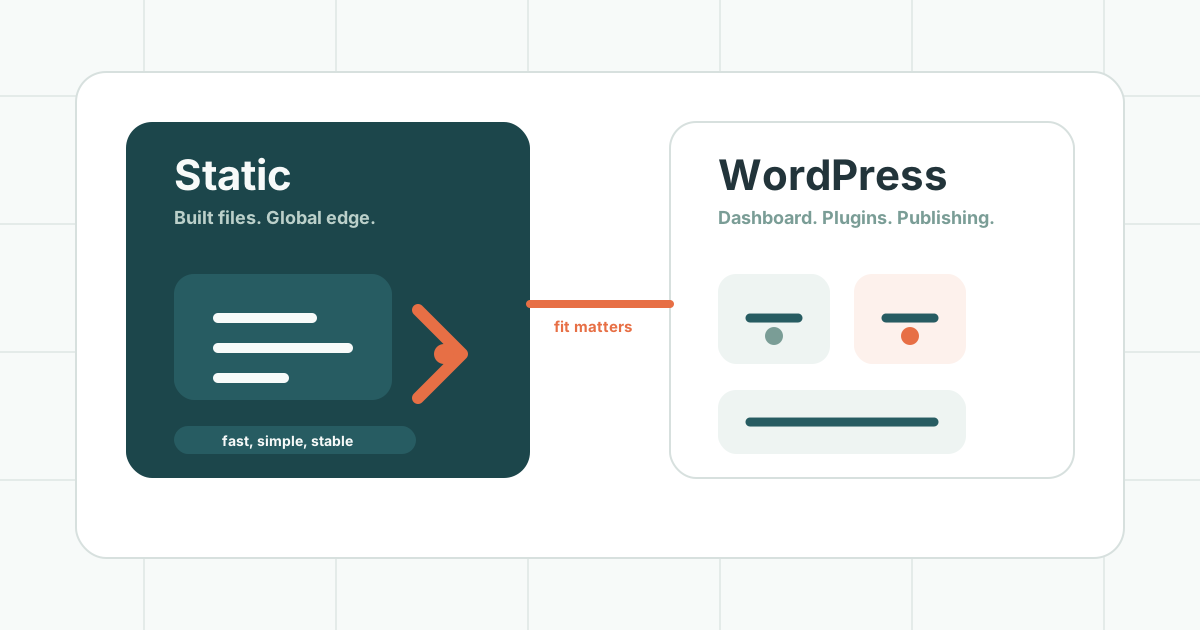
Choosing a website platform is one of those decisions that sounds technical at first, but it is really a business decision.
You are not just choosing software. You are choosing how your website will be updated, secured, hosted, expanded, and supported over time.
For many businesses, the choice comes down to two strong options:
- A modern static website, often built with tools like Astro and hosted on a global platform like Cloudflare.
- A dynamic content management system like WordPress.
Both can be excellent. Both can be fast. Both can support search engine optimization. Both can be the wrong choice if they do not match how your business actually works.
Here is the practical version.
What Is a Static Website?
A static website is built into finished HTML, CSS, JavaScript, and image files before it is published.
When someone visits the site, the server does not have to assemble the page from a database or run backend code for every request. It simply serves the already-built page.
That makes static websites very fast and very stable.
Modern static sites are not old-fashioned brochure pages. Tools like Astro can support reusable components, blog content, landing pages, product pages, SEO metadata, forms, analytics, and rich visual design. The difference is that the site is generated before visitors arrive instead of assembled on demand.
What Is WordPress?
WordPress is a content management system. It stores content in a database and renders pages dynamically when visitors request them.
Its biggest strength is editorial flexibility. A business owner, marketing team, nonprofit staff member, or volunteer can log in, edit pages, publish posts, upload media, manage menus, and install plugins without touching code.
WordPress also has a huge ecosystem. There are plugins for forms, memberships, events, donations, e-commerce, directories, learning systems, SEO, custom fields, and almost anything else you can imagine.
That flexibility is powerful, but it also means WordPress needs more ongoing care.
The Simple Difference
If your website is mostly content that changes occasionally, a static site may be the cleaner fit.
If your website needs frequent non-technical editing, user accounts, complex publishing workflows, or plugin-driven functionality, WordPress may be the better fit.
That is the heart of the decision.
Performance
Static websites usually have a performance advantage because there is less work to do when a visitor arrives. Pages can be served from a global edge network, close to the visitor, with very little server overhead.
That matters for:
- Mobile visitors
- Search performance
- Paid ad landing pages
- Small business websites
- Campaign pages
- International audiences
WordPress can also be fast, but performance usually depends on good hosting, caching, image optimization, theme quality, plugin discipline, and ongoing tuning.
A well-operated WordPress platform can serve serious traffic. A poorly maintained WordPress site can feel slow even on good hosting.
Security
Static websites have a smaller attack surface because there is no public admin dashboard, no live database, and no plugin system running on every page request.
That does not mean a static site is magically immune to risk. Domains, DNS, forms, analytics, third-party scripts, and deployment accounts still need to be managed properly — see our practical guide to website security for what that involves. But the common WordPress risks around outdated plugins, abandoned themes, vulnerable admin accounts, and database attacks are greatly reduced.
WordPress security is manageable, but it is a process. It usually requires:
- Regular core, theme, and plugin updates
- Backups
- Security monitoring
- Strong login protection
- Careful plugin choices
- Responsible hosting
For many small businesses, the security benefit of a static site is not that it is perfect. It is that there is simply less to maintain.
SEO
Both static websites and WordPress can be excellent for SEO.
Search engines care about things like:
- Clear page titles and descriptions
- Good heading structure
- Fast loading
- Mobile-friendly design
- Internal links
- Structured data where useful
- Helpful content
- Clean URLs
WordPress has popular SEO plugins that make metadata and content review easy for editors.
Static websites can have SEO baked directly into the build: page metadata, Open Graph tags, sitemaps, robots.txt, structured content, fast performance, and clean HTML from the start.
The platform does not do SEO for you. The structure, content, and implementation matter more.
Updating Content
This is where the decision gets practical.
WordPress is built for logging in and editing. If your team needs to update pages every day, publish articles frequently, manage events, upload resources, or give several people editing access, WordPress may be the right tool.
Static sites can absolutely be updated, but the workflow is different. Changes usually happen through a developer, a Git-based process, or a structured editing workflow. That can be perfect for businesses that only update occasionally and would rather send a support request than manage a dashboard.
For a small business, that can be a feature, not a limitation.
Instead of learning a CMS, worrying about plugin updates, and accidentally breaking layouts, the owner can simply request a text change, image swap, new landing page, or blog post.
Cost over Time
Static websites can be very cost-effective over time because hosting is simple, maintenance is lighter, and the site has fewer moving parts.
That makes them a strong fit for businesses that need:
- A professional online presence
- Fast load times
- Strong SEO basics
- Simple updates
- Low technical overhead
- Predictable support costs
WordPress can be cost-effective too, especially when the editing flexibility saves staff time. But the total cost should include hosting, plugin licenses, updates, security, backups, fixes, and occasional performance work.
The cheapest option up front is not always the cheapest option to own.
When a Static Website Is a Great Fit
A static website is often a great fit when:
- Your site is mostly informational
- You do not need daily editing access
- You want a fast, low-maintenance website
- Security simplicity matters
- SEO and performance are priorities
- You need landing pages or service pages
- You want support without managing software yourself
- Your budget is better spent on content, design, and marketing than plugin maintenance
This is why static websites are especially strong for small businesses, professional services, restaurants, local organizations, consultants, trades, simple portfolios, and campaign pages.
When WordPress Is a Great Fit
WordPress is often a great fit when:
- Your team needs to edit content frequently
- You publish a lot of articles or resources
- You need custom editorial workflows
- You need event, membership, donation, LMS, or directory features
- You have many content types and relationships
- You need multiple editor roles
- You need a familiar admin dashboard
- You have the budget and support plan to maintain it responsibly
WordPress is not “bad.” It is powerful. It just needs the right operating model.
For large content platforms, nonprofits, associations, publications, and complex resource libraries, WordPress can still be an excellent choice.
What About Shopify?
If the main job of the website is selling products online, Shopify deserves its own consideration.
Shopify is not a static website or WordPress. It is a commerce platform. It handles products, checkout, payments, taxes, shipping, customer accounts, order management, and the admin tools merchants need to run a store.
For many e-commerce businesses, the better question is not static vs. WordPress. It is:
Should this be Shopify, and what custom theme, app, reporting, or marketing support does the store need around it?
A Practical Decision Guide
Choose a static website if you want:
- Speed
- Simpler security
- Lower maintenance
- Great SEO foundations
- A polished marketing site
- Occasional supported updates
- A site that is easy to host globally
Choose WordPress if you need:
- Frequent in-house editing
- Complex content management
- Many editors
- Plugin-powered features
- Events, memberships, directories, or resource libraries
- A familiar publishing dashboard
Choose Shopify if you need:
- Product management
- Checkout and payments
- Order workflows
- Shipping and fulfillment
- Commerce-focused marketing tools
- Store apps and customer reporting
The Best Platform Is the One That Matches the Work
The right website platform should fit the reality of your business.
If your website is mostly there to explain who you are, help people find you, support SEO, and convert visitors into leads, a static website can be a fast, secure, affordable choice.
If your website is a living publishing system with editors, resources, events, and complex workflows, WordPress may be the better foundation.
If your website is a store, Shopify is probably where the conversation should start.
The important thing is not choosing the trendiest platform. It is choosing the platform that gives your business the right mix of speed, control, flexibility, security, and support.
Start there, and the technical choice gets much easier.